Society
12 minutes
Professor Xu, many people are currently talking about artificial intelligence (AI), but for most of us, the topic still feels very new. You have been working intensively in this field for many years. How did you become an AI expert?
Feiyu Xu: I came to Germany from China in 1991 because I wanted to study here. I was very good at mathematics and quite good at languages. That’s how I came to study Computer Science and Computational Linguistics. I was very lucky that the German Research Center for Artificial Intelligence (DFKI) was already in Saarbrücken at the time. Back then, Computational Linguistics was still very specialised. There were at most 30 students in a lecture, and fewer than 10 graduated. Now there are more than 300 students in AI lectures.
You have since received several awards for your many years of research and gained practical experience as Head of AI Lab at Lenovo in China and Global Head of AI at SAP in Germany. You have advised the German government on this topic and have also founded a start-up. Did you foresee this development in AI?
Feiyu Xu: No. I didn’t expect AI to develop so quickly and become part of everyday life. The pace has been particularly rapid over the past five years.
But because most of us are still unsure about AI terminology – what is so special about AI? Can you define it for us?
Feiyu Xu: Gladly. AI simulates and extends human perception and cognition. Perception includes language, hearing, seeing and even smelling. Cognition encompasses everything related to thinking, planning and analysing. However, many AI systems are often more powerful than humans. For example, AI can translate more than 100 languages, recognise 100,000 faces or identify millions of plants and animals at a glance. And it can do this 24 hours a day, seven days a week. AI can even transform us creatively. With the help of AI, we can have a picture painted like Picasso. But above all, AI makes the interaction between us humans and machines more natural. We can now talk and interact with software and hardware in the same way as we do with humans.
In the business world, AI is primarily intended to make processes more efficient and products better, right?
Feiyu Xu: It’s not quite that simple. Before either of these things can work, companies first need to define a clear AI strategy. That sounds simple enough, but in practice it often doesn’t happen. The first question is: can the company use AI to make its products more intelligent? In the automotive industry, the answer is obvious – without AI, there would be no autonomous driving. AI is also giving rise to completely new products, for example, in aviation: drones would be unthinkable without AI.
Now, many companies want to use AI to optimise processes, don’t they?
Feiyu Xu: That’s right. Many companies are starting with AI in the area of process optimisation – especially in the mechanical engineering industry, where AI makes manufacturing steps more precise and efficient. Then there are business processes: SAP plays an important role in intelligent processes, particularly in this area. However, I wouldn’t start with processes that involve direct customer contact, so that mistakes made in the first AI experiments don’t damage valuable customer relationships. And then there is a third, very important point: as soon as you start working with data and digitalisation, there is almost always an opportunity to develop a new business model – for services, for data-based solutions, for completely new offerings. AI is therefore not only about optimisation, but also a real driver of innovation.
Can you explain that in more detail?
Feiyu Xu: Most traditional German companies still work with very linear business models. They sell machines, e.g. cars – often as a one-off transaction. Many car manufacturers and machine builders have now realised that additional service packages can be worthwhile because they generate continuous and recurring revenue. But in comparison, there are American and Chinese companies, such as Google, Amazon, Tencent and Alibaba that have built platforms and entire ecosystems. They are so successful today because they use exponential business models. I believe it is crucial for German companies to develop precisely such new business models in order to remain competitive in the long term.
Now we are here with an asset manager and should don our investor’s glasses. In your opinion, what should one look for when investing? Would you be more likely to select companies that use AI particularly well in traditional industries and thus become more efficient? Or would your focus be on what are known as AI companies?
Feiyu Xu: I need to back up a little here. The AI ecosystem basically starts at the bottom, with computer chips. At the top are chip designers and manufacturers, such as Nvidia and TSMC. The big cloud companies – Google, Amazon and Microsoft – build on this with their platforms. These companies are currently investing heavily. And the big players in China, such as Tencent and Baidu, are acting similarly strongly.
Most companies in Germany, conversely, are on a different level: they develop applications or use AI applications in their products and processes. This is extremely important for the European economy, because our industry in particular thrives on technologically strong applications. That’s why digitalisation is so crucial at this point – and mere continuous improvement will not be enough. Incidentally, digitalisation also includes the electrification of industry. I think that we in Europe and Germany need to develop much more ambition. We should clearly show that we want to be number one in a key industry of the future. This is not easy for the automotive industry at the moment, but I see certainly great opportunities in other areas.
Now, one could say that we have to be number one in this area. But AI has long since arrived elsewhere. And there is a huge infrastructure behind it. That is, the language models and data centres, each of which costs tens of billions. In addition, these data centres have high energy costs. And that brings us back to the next issue in Germany. At the end of the day, one wonders: hasn’t the train already left the station?
Feiyu Xu: I don’t think the train has ever left the station. What I find lacking in Europe is passion – and the ambition to really create something new. I sit on the Supervisory Board at Airbus, and I think we can be very proud of this company. I often hear people say they are afraid to fly on planes made by our competitor Boeing. But let’s remember when Airbus was founded in the early 1970s, one could just as well have said then that the train had long since left the station in aircraft construction. And yet it has become one of Europe’s greatest success stories.
Even “Made in Germany” did not originally start out as a seal of quality. It was the English who wanted to use it to mark the origin of German products – in the firm belief that German goods were inferior. And yet it later became a global seal of quality. Time and again throughout history, there have been moments when Germans or Europeans were initially considered the underdogs – and yet they still achieved outstanding things. We need to rekindle this ambition in Germany and Europe. And to do that, we need a clear plan for how we can really win in the wake of digitalisation and new technologies.
So, from your point of view, it’s not just about improving existing industry, but also about catching up with AI companies in the narrower sense?
Feiyu Xu: Of course. Look at the “Magnificent Seven”. They represent a huge industry, a huge market that we shouldn’t just leave to the USA and China. Especially since we’re not short of ideas either.
AI is currently a topic of discussion at almost all companies. In many cases, it has already been implemented in some form. But some people think this is a little exaggerated. And so, an AI team is half-heartedly set up, consisting of a few young people who are then supposed to try it out. Is that enough?
Feiyu Xu: Absolutely not. If a company is seriously interested in artificial intelligence, then the topic belongs under the responsibility of the supervisory board, board of directors or executive board – and it must be an integral part of the corporate strategy. I have experienced many companies up close: first at Lenovo, where I developed the AI strategy and built the central AI team, and later in a similar role at SAP. Almost all of the projects were very successful – but only because they were backed by a clear, comprehensive strategy. Without such a holistic AI strategy, investments are often misguided or plans fail to address the actual priorities.
Recently, a large US telecommunications company asked me to evaluate an AI application in the field of human resources. My first question was: why should a telecommunications group invest in this area of all places? After all, this industry is primarily concerned with network stability, network optimisation and service quality. There was no convincing answer to this question – and that is precisely what reveals the strategic gap. That is why every company that takes AI seriously needs a holistic AI strategy and a clearly formulated North Star to guide all initiatives.
What would such a North Star be?
Feiyu Xu: Let’s take the automotive industry, BMW or Mercedes, for example. That could be the development of the self-driving car. And once you agree on a goal like that, you have a very clear investment path. For a mechanical engineering company, on the other hand, it’s often about improving the manufacturing process, for example, optimising the supply chain in the face of geopolitical challenges.
Let’s come back to Germany as a business location. Are there any areas where you would say the government needs to provide a better framework? For example, on the issue of energy costs, or is this issue being overestimated?
Feiyu Xu: No, it is not being overestimated. The USA and China have significantly lower electricity prices than Germany. We urgently need to invest in the energy sector here – and in AI technologies at the same time. The demand is enormous, not least due to the massive electrification of our industry.
At the same time, the EU has taken an important step with the so-called AI Gigafactory initiative. And I think Germany should have acted strategically here in a similar way to France – or even better: we should have seized the opportunity to take joint action. After all, there were at least six applications from German companies. This is precisely where the state needs to play an active role: it must identify our strengths in an AI Gigafactory – location, energy, technology, cloud, applications – and how we can expand these through targeted investments. This cannot be left to individual companies. We have great companies in Germany: Siemens is excellently positioned in the field of AI industry; SAP is a global leader in business processes; and Siemens Energy in the energy sector. Bringing these competencies together would have been a very strong strategic configuration for Germany and Europe.
You talk about business models. But isn’t one of the problems that, when it comes to AI, the public debate here tends to focus more on warnings than on simply letting companies get on with it?
Feiyu Xu: I completely agree with you. If we want to win and really be Number One, then we need ambition, and we need resilience. That is something that would have to change fundamentally in our society. I even see this in the family environment: we often try to read our children’s every wish from their eyes, show a lot of compassion – sometimes perhaps too much. But in the end, if you’re not resilient and don’t learn to take responsibility for yourself and the community, you’ll have a hard time later on – both as an individual and as part of a team. Success requires inner strength, perseverance, and the will to take responsibility.
You mentioned earlier what AI can do and what none of us here in the audience can do. Why does AI take so long to get a driving licence? So why does a human being usually need up to 20 driving lessons, while the development of autonomous driving takes years?
Feiyu Xu: A human being brings a lifetime of experience to driving – we understand road traffic intuitively, read body language, and recognise risks. AI, on the other hand, starts from scratch and has to learn millions of special cases that we take for granted. Technologically, autonomous driving already works in many scenarios today. What is missing are clear rules, liability issues and social acceptance. We tolerate mistakes made by humans, but we expect perfection from AI – and that is precisely why it takes longer.
Even companies that work with AI usually have to live with a margin of error because AI cannot cover everything as yet. How do companies deal with this?
Feiyu Xu: Yes, many companies use AI for chatbots in customer service, for example. However, this often does not work in escalated situations. A smart company will therefore ensure that AI and humans work together: AI may answer 90 per cent of the most frequently asked questions, while employees take care of troubleshooting and de-escalation. Nevertheless, the use of AI can also lead to significant savings here – resulting in clear efficiency gains.
Professor Xu, thank you very much for talking to us.
About Feiyu Xu:
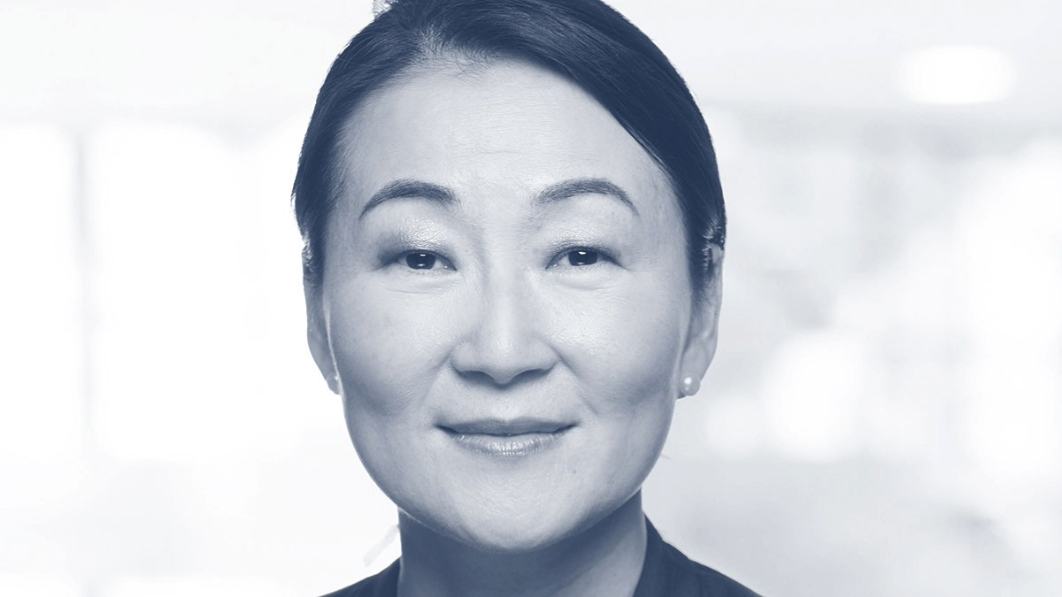
Prof. Dr. Feiyu Xu holds a professorship in Industrial AI in Potsdam. Her research has received numerous awards. She also served as Global Head of AI at SAP from 2020 to 2023 and led Lenovo’s AI Lab from 2017 to 2020. Feiyu serves on the supervisory boards of Siemens Energy, ZF Group, and Airbus..

About the author
LEGAL NOTICE
One of the purposes of this publication is to serve as advertising material.
The information contained and opinions expressed in this publication reflect the views of Flossbach von Storch at the time of publication and are subject to change without prior notice. Forward-looking statements reflect the judgement and future expectations of Flossbach von Storch. Actual performance and results may, however, differ materially from such expectations. All information has been compiled with care. However, no guarantee is given as to the accuracy and completeness of information and no liability is accepted. The value of any investment can fall as well as rise and you may not get back the amount you invested
This publication does not constitute an offer to sell, purchase or subscribe to securities or other assets. The information and estimates contained herein do not constitute investment, legal and/or tax advice or any other form of recommendation. In particular, this information is not a replacement for suitable investor and product-related advice and, if required, advice from legal and/or tax advisers.
This publication is subject to copyright, trademark and intellectual property rights. The reproduction, distribution, making available for retrieval, or making available online (transfer to other websites) of the publication in whole or in part, in modified or unmodified form is only permitted with the prior written consent of Flossbach von Storch.
Past performance is not a reliable indicator of future performance.
© 2026 Flossbach von Storch. All rights reserved.